Gas Safe Certificate – £102 inc VAT
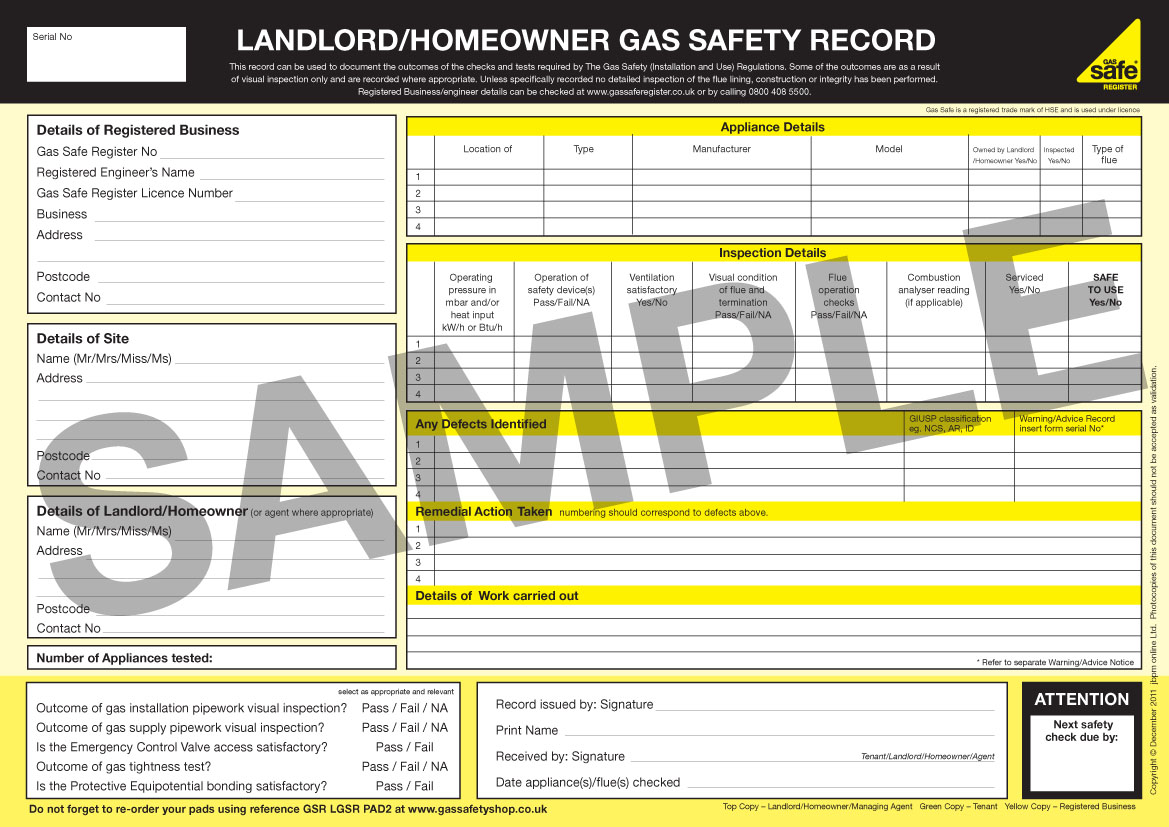
Required by law is a Landlord Gas Safety Record. It will detail exactly what checks your engineer has carried out and if the appliances checked meet the appropriate safety standards.
As a landlord letting a residential property, you have a legal duty to ensure it’s safe for your tenants. This means you’re required by law to get a Gas Safe registered engineer to do an annual gas safety check on all gas appliances – and it’s the results of these checks that are recorded in your Landlord Gas Safety Record. You’ll receive a copy, and you’ll need to provide a record of this check to your tenants.
In your record, you should find:
- A description and location of each appliance or flue that was checked
- The name, registration number and signature of the engineer who made the checks
- The date the checks were carried out
- The address of the property where the appliances or flues are installed
- Your name and address (or an agent’s where applicable)
- Information on any safety defects and actions needed or taken to fix them
- The results of all operational safety checks carried out on the appliances
The gas pipework in your rented property must also be kept in a safe condition. Installation pipework is not covered by the annual gas safety check, but we include the following:
- Test for tightness on the whole gas system, including installation pipework
- Visually examine the pipework (so far as is reasonably practicable)
Want to see an example of what the Landlord Gas Safety Record should look like? Download it here.

Repairing Standard: statutory guidance for private landlords
Published 31 January 2024
Directorate Local Government and Housing Directorate
ISBN 9781835218891
This guidance is for use in determining whether a house meets the standards of repair set out in the Repairing Standard (Housing (Scotland) Act 2006, Chapter 4). It applies from 1 March 2024 to all tenancies required to meet with the Repairing Standard.
Read more